The Unlikely Beginning
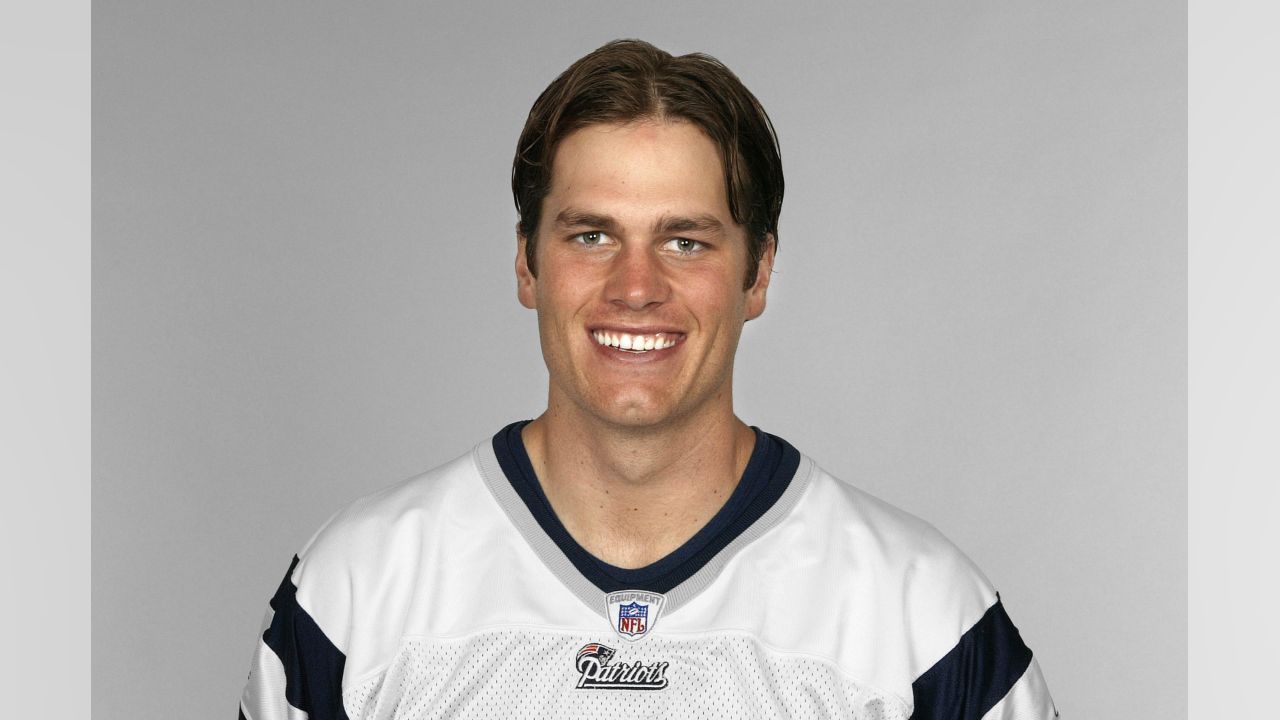
Tom Brady was never supposed to become the face of the National Football League. Born on August 3, 1977, in San Mateo, California, he grew up as a multi-sport athlete who eventually focused on football at the University of Michigan. Even there, greatness was far from guaranteed. Brady spent much of his college career buried on the depth chart, waiting patiently behind established starters.
When the 2000 NFL Draft arrived, most teams passed on him repeatedly. Six quarterbacks were selected ahead of him. Finally, with the 199th overall pick in the sixth round, the New England Patriots took a chance. Few outside the organization believed the skinny California kid with the average arm strength would amount to much. Bill Belichick and his staff saw something different: an obsessive competitor with elite football intelligence and an almost unnatural ability to process the game under pressure.
Building a Dynasty in New England
Brady’s opportunity arrived earlier than expected. In 2001, starter Drew Bledsoe suffered a serious injury, and the second-year quarterback stepped in. What followed remains one of the most remarkable runs in professional sports. By the end of the 2004 season, Brady had already delivered three Super Bowl championships (XXXVI, XXXVIII, and XXXIX) and established himself as the most clutch performer of his generation.
The middle and later years of the Patriots dynasty only reinforced the legend. The 2007 season produced a then-record 50 touchdown passes and a perfect regular season. Super Bowl XLIX against the Seattle Seahawks featured the iconic Malcolm Butler interception. Super Bowl LI against the Atlanta Falcons produced the greatest comeback in championship history. Super Bowl LIII against the Los Angeles Rams closed the New England chapter with a sixth title.
Across two decades in Foxborough, Brady rewrote the record books. He became the standard against which every future quarterback would be measured — not only for production, but for longevity, consistency, and an almost supernatural ability to elevate those around him when the stakes were highest.
The Tampa Bay Chapter
After 20 seasons and six championships, Brady made the decision that shocked the sports world. In March 2020, he left the only franchise he had ever known and signed with the Tampa Bay Buccaneers. Skeptics predicted decline. Instead, Brady delivered one of the most satisfying victory laps in modern sports history.
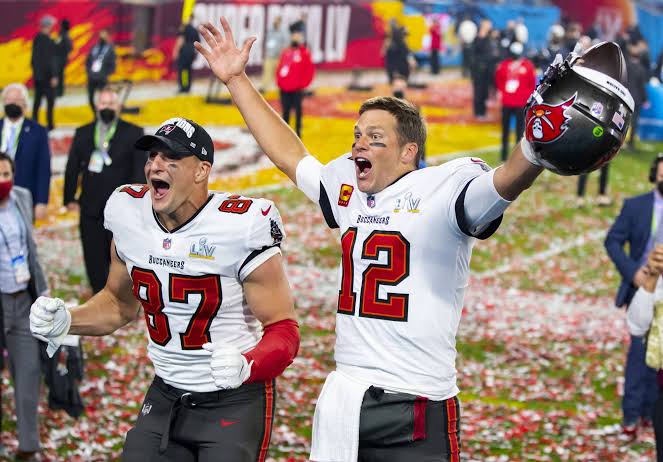
In his first season in Tampa, he led the Buccaneers to Super Bowl LV and captured his seventh Lombardi Trophy — becoming the only player in NFL history to win Super Bowls with two different franchises as a starting quarterback. He also earned his fifth Super Bowl MVP award that night, further distancing himself from every peer in the conversation.
The Final Whistle
Brady first announced his retirement in February 2022. Forty days later, he reversed course and returned for one final season. The 2022 campaign was imperfect, yet it still produced individual brilliance and a playoff appearance. On February 1, 2023, he stepped away for good.
He left the game holding nearly every significant quarterback record that mattered: most career passing yards, most touchdown passes, most wins by a starting quarterback, most Super Bowl appearances, and most Super Bowl victories. At 45 years old, he had outlasted and outperformed an entire generation of elite talent.
333 games played • 89,214 passing yards • 649 touchdowns • 251 regular-season wins • 35 playoff wins • 7 Super Bowl titles • 5 Super Bowl MVPs
Life After Football: Media, Business & Empire
Retirement did not slow Brady’s momentum. In 2022 he signed a landmark 10-year agreement with Fox Sports reportedly worth approximately $375 million to serve as the network’s lead NFL analyst. The deal, which began in earnest in 2024, stands as one of the richest broadcasting contracts in sports history.
Beyond the broadcast booth, Brady has continued building a diversified business portfolio. The TB12 Method — the training and recovery system he developed with longtime body coach Alex Guerrero — remains a cornerstone of his brand. He has expanded the Brady apparel line, invested in private companies, launched production ventures, and taken a minority ownership stake in the Las Vegas Raiders, approved by NFL owners in 2024.
His approach to wealth creation has been deliberate: converting personal brand equity into long-term ownership stakes rather than relying solely on traditional endorsement deals. That strategy has allowed his post-playing net worth to continue climbing steadily into 2026.
Wealth & Financial Standing
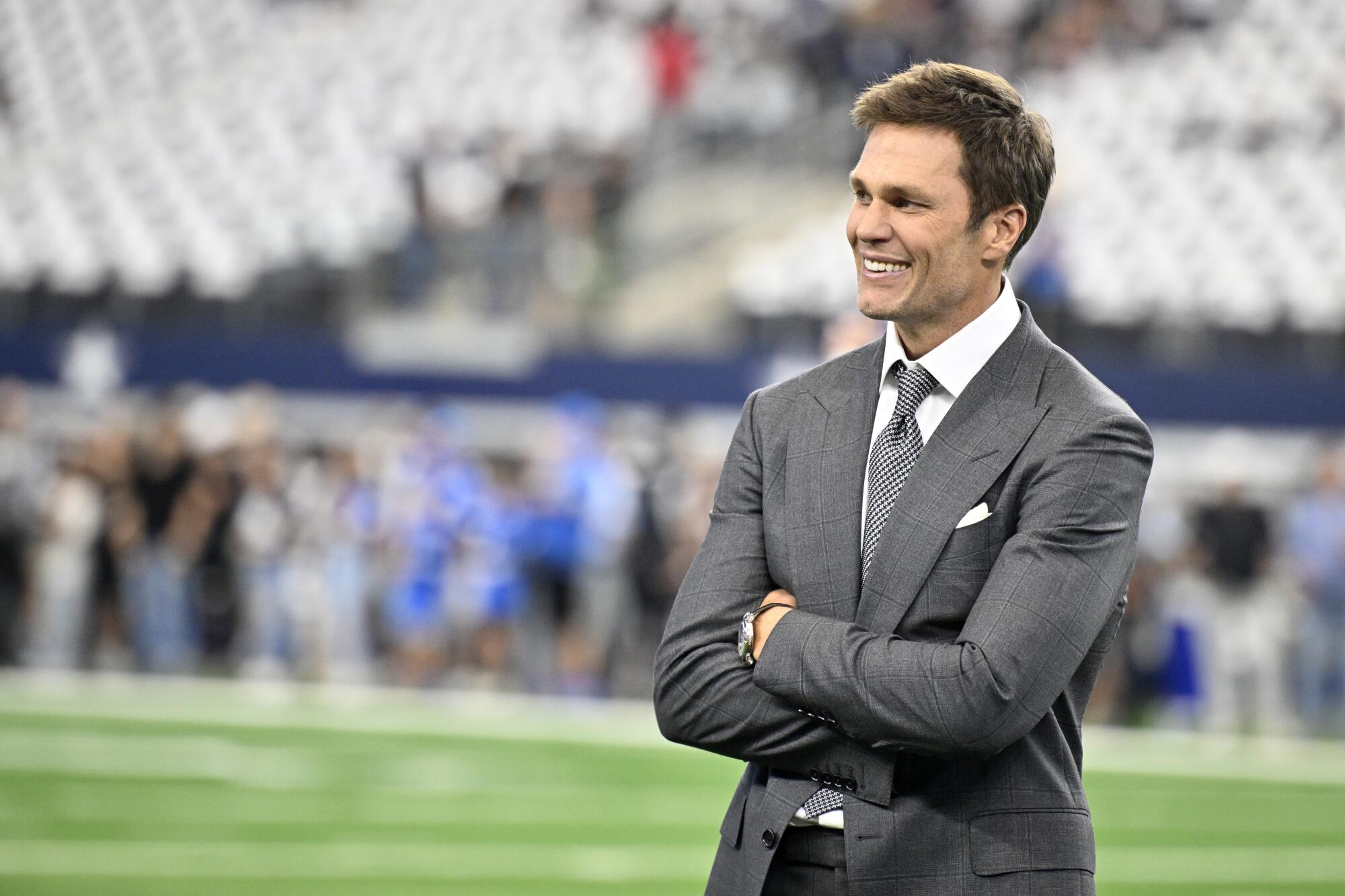
During his playing career, Brady earned well over $300 million in salary and bonuses. That foundation, combined with the Fox contract, equity positions, real estate, and brand ventures, has pushed his estimated net worth into the $300–350 million range as of 2026, according to multiple financial publications.
Industry observers note that the structure of his media deal and ownership interests positions him for continued growth. Unlike many athletes whose earnings peak during their playing years, Brady’s second act is designed for compounding returns over the next decade.
The Enduring Legacy
Three years into retirement, Tom Brady’s influence on the sport remains unmatched. He changed how quarterbacks prepare their bodies, how long elite players can remain effective, and what sustained excellence looks like across two decades. He forced a generation of defenders, coaches, and executives to raise their standards simply to compete with him.
Whether measured by championships, individual awards, longevity, or cultural impact, the case for Brady as the greatest quarterback — and one of the greatest team-sport athletes — in history is overwhelming. From a sixth-round draft pick who was nearly overlooked to the most decorated player the NFL has ever produced, his arc remains the definitive underdog-to-icon story.